About Angela Keller

This author has not yet filled in any details.
So far Angela Keller has created 210 blog entries.

Book Review: The One Thing
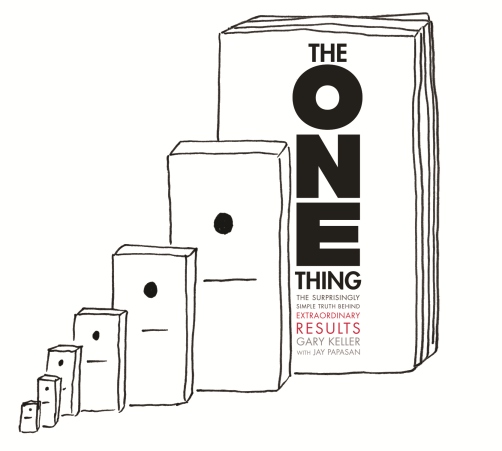
At Peace With Money: Book Review: The-One-ThingThis summer, I read The One Thing by Gary Keller (no relation), and my initial reaction was irritation. Essentially, the book advises us to focus on one big goal that you want to accomplish and then break that goal down into smaller time chunks.The goal is to do something small to work toward that goal every day. The key is focusing. That’s probably why it irritated me.

Staying focused is definitely something that I struggle with. As a business owner, as a wife and mother, as a person in today’s world of distracting gadgets – focusing is difficult!  It seems there is always a fire to put out, a need to be met. Always there is an idea that is nibbling your brain, or a rabbit hole to dive into and lose 45 minutes of your life. My reaction was about something I need to work on in myself rather than the idea the author presents.  

He also suggests scheduling that focused time into your calendar and protecting it – another challenge for me. On top of that, he debunks the idea of multi-tasking. This felt blasphemous to me at first. What mother do you know who does not pride herself on juggling multiple balls in the air on a daily basis!?! It seemed to me that Gary Keller was basically trying topull the rug out from under my life! This book made me so angry that I had to take a few months to calm down enough to even write this review.

Practical Applications

But somehow, this morning I woke up thinking about this book again. A practical example to apply his basic techniques popped into my mind. Let’s say you want to save $30,000 to buy a house over the next 5 years. That sounds like a lot of money to save and a crazy goal! But if we break it down to saving $6,000 this year and saving $500 each month which means saving about $17 each day, it becomes manageable. To reach this goal, we ask, what’s the one thing we can do today to get that started? Perhaps you open the savings account. Maybe you start a side hustle and allocate all the income to that goal. You might start saving your cash in a money jar to deposit at month end. Maybe you resolve to pack your lunch.

The One Thing Book Review: At Peace With MoneyWhat’s important is getting started by taking some action today to make the goals you have for your future turn into a reality.  That is a lesson I can take from this book.

I might have to work on my focus, and reexamine my views on multitasking. However, I do feel I stand behind the ultimate message of this book: get clear on your goal, focus on it, and work towards it every day. If you do that, you will achieve what you’re after. Whether that’s saving for a house or starting a business, this is an important reminder in how we approach our financial goals. If you need an accountability partner to help you get started, please feel free to reach out.  I would love to help you reach your goals (and I promise not to forbid you from multitasking!)


Angela

Image Sources: Squidhub, Bonehead Business

Check In With Your Goals – Time for a Review

Check In With Your Goals: At Peace With Money

Time to review your goals.  Only four months left in 2018, can you believe it? It’s certainly flown by for me, which is why this week I want us to take some time to reflect on our goals. Many of us set goals at the beginning of each year.  You may have set some goals for your business that you have since been working towards. It’s been a while since January, so now’s the time to check in!

The Review

Review your goals and begin to reflect on your progress for each one. Now, here’s the tricky part: don’t get caught up in what you still need to do. Instead, it’s important to spend a good chunk of time reviewing what you’ve already done to reach your goals. If you feel like you can’t remember everything, try going back month by month. If you use a day planner, flip through it and scan your old to-do lists. Chances are, you will find you’ve done quite a bit of work towards your goals, no matter how close you might be to completing them! Take some time to reflect on the work you’ve done, and congratulate yourself on this work. Celebrate your achievements so far! Being a self-starting solopreneur is hard work. If you’ve done the work, you deserve to cheer yourself on once in a while.

While you’re having this victory party for yourself, now may also be a good time to map out what you hope to get done during these last three months of 2018. By reflecting on what you’ve done up to this point first, you are able to clearly see the pace you work at. With this in mind, you can set realistic expectations for the next three months, rather than trying to cram in too much work.

My Check-In

You may remember that I set a goal earlier this year to be mindful by enjoying what’s right in front of me. I want to share a little check-in of my own on this goal. That way, you can see how it’s going and be inspired to reflect on your own goals.

I’ve been doing a couple things throughout this year to stick with this goal. Every weekday, for 10-15 minutes each morning, I’ve been writing in my little gratitude journal. During my morning walk, when I reach the top of our road, I cross the street to take in the view of the Monterey Bay for a few minutes. In this way I’ve been able to appreciate the place I live more fully. I also notice changes in the season and the forest, and even the subtleties of the fog cover.

Check In With Your Goals: At Peace With MoneyI’ve also been trying to practice a technique for grounding my memories. The way this works is, when having a good experience, you try to capture the memory by taking in all the sensory details. Notice how your surroundings smell, feel, sound, and taste. Paying attention to these details has helped me appreciate them more. I learned this technique from Lucky Bitch by Denise Duffield-Thomas. It’s a great read, and I hope to do a book review on it soon!

For more resources on reviewing your goals, I recommend this video series by Muchelle B. on Youtube. I hope this post inspires you to check in with your goals, celebrate your hard work, and be mindful of your capacity as you finish out the year. Remember to enjoy your business, and your life! If you find you need some help setting goals, especially for your business, check out my services page or set up a discovery call with me!

Angela

Image Sources: Brooke LarkAmy Shamblen

How A Reliable Car Can Save You Money in the Long Run

How a Reliable Car Saves You Money: At Peace With Money

Earlier this year, we said goodbye to a dear old friend – our Ferrari red ’92 Volvo station wagon. We bought it just after we had our first daughter, and since then, it has been with us through thick and thin. That is, until it got T-boned. All told, we owned and regularly used the car for over 20 years.

Having a good reliable car helped us save money in the long run. Because we were able to keep it so long, we eventually completely paid it off. We also saved big on the maintenance of our car. Volvos are known for their long-lasting engines, and ours was no exception to the rule. Though it did require repairs, it was not a finicky car the way others can be (we’re looking at you, Mercedes-Benz). We did our research before we purchased this car to make sure we didn’t buy something that would be too needy. We ended up saving a lot of money over time because we had to deal with fewer repairs. We’re also lucky to have an in-house mechanic; my husband did many of the repair jobs that were needed, which saved us still more money.

Ultimately, we got more than our money’s worth out of this car. My husband drove it to work, we drove the kids and their friends around in it, took it on many a road trip, let our kids drive it in their teenage years, and moved our oldest daughter to and from college many times. We wouldn’t have been able to keep it so long if it hadn’t been so reliable!

My advice is: do your research and buy a car that won’t need a lot of repairs! This article from Consumer Reports is a good place to start, but don’t stop there. Do more research, compare sources, and make sure your car purchase is a thoughtful one. If there’s anything I learned from owning the Volvo, it’s that your car choice can make a big difference in your finances. If you’d like more advice on purchasing a car, check out my other article about avoiding “car-shopping-brain” and making a purposeful choice.

I hope this advice inspires you to make a thoughtful car purchase, or simply appreciate your car. And next time you see someone driving a Volvo station wagon, admire their money savvy!

Angela

Image Sources: Court Prather, Clem Onojeghuo

The Possibilities of Rejection Therapy

The Possibilities of Rejection Therapy: At Peace With Money

Everyone dislikes rejection. So the thought of “rejection therapy” may seem less than enticing at first. But when I came across this idea, I immediately thought of how useful this could be for solopreneurs. How so? By helping us learn to make the big asks!

Learning to Love “No”

In a recent podcast episode, Hillary Hendershott featured Alex Grodnik, an investment banker turned entrepreneur  who discussed “Rejection Therapy”.  His therapy practice is simple: every day he asks for something and tries to get a “no” answer. This regular practice desensitizes him to rejection, and makes it easier for him to ask for what he wants. I think this is a great exercise for any of us: we all need a little help in asking for what we want!

Make the Ask

Rejection therapy is really about encouraging you to make the ask, and remember that the worst case scenario is hearing “no”. Once you’re desensitized to that outcome, it doesn’t feel nearly as scary as it used to! What are some things related to your business that you’ve been wanting to ask for? Maybe this issue comes up for you when you’re negotiating your rates, or looking for new clients, or cutting a deal with someone. Think about the big asks you’ve been needing to make. What if you just made them?

My best ask ever was getting to visit bead makers in Murano, Italy, when I was running my jewelry business. I was planning a trip to Italy, when I realized I would be very near the studio that the beads I used to make my jewelry came from. I had practiced bead making for a little while at that point, and my heart leapt at the thought of getting to visit and observe master bead makers. Before the trip, I reached out to them and they enthusiastically encouraged me to come to their studio. I even got to use their equipment and make beads along with them! If I hadn’t asked, I wouldn’t have had that experience. Making the ask made all the difference.

Can you think of a time when you made a big ask that worked out well? Think of the positive impact it made on your life. Asking is important! I encourage you to try out rejection therapy and work on asking for what you want and need. It will only help your business, and help you achieve your dreams! If you find you need some guidance or coaching, check out my packages under my Services page.

Angela

Image Sources:  Katerina RadvanskaJeremy Galliani

How to Get The Most Value From Your Bookkeeper

How to Get the Most Value Out of Your Bookkeeper: At Peace With Money

As a business owner, every time that you outsource a task for your business, you want to make sure you are getting the highest value out of that task. Particularly if you are hiring a professional for services, such as a CPA or bookkeeper, they should not only provide the service you need to keep your financial records up to date. They should also be able to provide you with insight or advice into your business finances. They regularly see all the financial facts of your business right in front of them. If they aren’t interpreting and discussing with you the trends they see in your business,  or they aren’t talking about or making suggestions to support the health of your business , they are actually doing you a disservice. Financial professionals can easily access that information. Making sure you hire someone who is willing to talk to you about those things and provide information that will provide you with much greater value from this professional service. If you are able to apply these financial insights, your business will benefit greatly in the long run.

This point also illuminates the value of hiring a professional in the first place. Hiring someone who knows what they’re doing to both keep your books in order and analyze financial trends is important. Paying a professional a higher wage for a better quality work, rather than hiring someone who doesn’t do the job well, will greatly benefit you and your business. Someone who can provide you with valuable information about expenses, cash flow, profit margins, and other financial inner workings of your business can prove invaluable in the long term. Think of hiring a talented professional as an investment in your business’s financial wellbeing.

How to Get the Most Value Out of Your Bookkeeper: At Peace With Money

When you are looking to hire a CPA or bookkeeper, inquire whether their services include providing these insights and consultations. If you are already working with a particular professional, ask them if they are willing to start discussing their financial findings with you. If not, maybe it’s time to find someone else – because that valuable financial knowledge of your business is absolutely worth it. If you’d like to speak with me about my financial services, schedule a discover call!

Angela

Image Sources: Sergey Shmidt , Sharon McCutcheon

The Power of a Seed

The Power of a Seed: At Peace With MoneyI am about to take off on a bucket list trip: I will be riding a motorcycle 1,400 miles to Sturgis, South Dakota.

Three years ago, my husband and I went to the Sturgis motorcycle rally for the first time. I rode on the back of a Harley we rented for the trip. My husband has been riding motorcycles all his life, but this was a big trip for him to take on at that time.  While we were in Sturgis that first year, I saw a lot of women riding bikes and found myself wanting to do the same. These women planted the first seed of inspiration in my mind. My husband has actually tried to teach me to ride before, but it usually ended in disappointment and a few choice words.

After going a second year to Sturgis as a passenger, I again saw lots of women on bikes. I noticed that these women weren’t particularly large or strong, or even necessarily young. They were a lot like me. That’s when I decided thatif these women could ride Harleys and other large bikes, I could too. Upon returning from that trip, I completed my local motorcycle safety program and got my license. We bought a Honda Rebel 250 and I set a goal to ride my first 500 miles. Then I set my sights on a bigger bike, more mileage, and a longer trip. Three years ago in Sturgis, my friends took a picture of me sitting on a red Indian motorcycle, just as a joke. This week I’m going to be riding my new red Indian motorcycle on this trip.

The Power of a Seed: At Peace With Money

I’m not recounting this story simply to tell you that I’m a “badass biker chick”. I’m also a 52 year-old mom that makes a living as bookkeeper and finance coach. But I am a badass because a seed was planted, which I started to believe in and nourish. I set some goals and accomplished them one at a time. Now, I’ve achieved my dream. 

If you are struggling to make a change or believe in your goals, I hope my story can inspire you this week. Whetheryour goals are business related or purely personal, I want you to remember to take one step at a time, and know that you can get there eventually.

Angela

Image Sources:  Guilherme VelosoJanFillem

By |2018-09-17T04:55:00-07:00July 30th, 2018|Categories: Money Mindset|Tags: , , , , , |0 Comments

What’s Your Money Why?

Your money “why” is like your business’s compass, because it’s hard to get where you’re going if you don’t know exactly where you’re going or why you’re going there! Everyone talks about finding your “why” – your motivation or purpose – in business. Doing so is absolutely important, but today I want to talk about your money “why” because I think that is equally important to the direction of your business. Knowing exactly what your goals are for the money your business generates will  guide you in your financial decision making process and ultimately to the realization of said goals.  

My Money Why

When I started my first business, I wanted to make some “extra money.” The problem was, I really wasn’t clear on what that money was for. Without direction that extra money seemed to  simply come and go.  When I started my bookkeeping business, I had a specific goal for the money I was making: I was paying college tuition for our oldest daughter. She has since graduated and I am now in the process of putting our second daughter through college (three years to go!). After my goal for my money is to supplement our retirement, so that my husband can leave his demanding career. Because I know specifically what these things cost, I have an exact number to set as my revenue goal.

Know Your Money Why: At Peace With Money

Whether you have started your business to fully support yourself or your household, or you’re doing a side hustle to pay for “extras,” if you know your money goals and can get some exact numbers you need to meet in order to reach these goals, you will be so much more clear on how to get there. This added clarity will simplify your decisions, and make your objective more clear. You will also be more likely to make better decisions to maintain your business’s profitability. They always say, “keep your eye on the prize.” Doing so is a lot easier when you know what the prize is!

So, ask yourself a few questions: Why did you go into business? What are some life goals you have that cost money? What are some specific financial goals you need or want to meet with your income? Come up with specific numbers and stay focused on those – now you know your money why! If you need some assistance getting to the bottom of your money why, perhaps you’d like to check out my Business Beginnings or Turning Points packages. 

Angela

Image Sources: James ChouCasey Horner

What is the Feminine Economy?

What Is the Feminine Economy? At Peace With MoneyAs someone who’s been involved with finance throughout my career, I love hearing about and researching new financial ideas. When I came across Proposals for the Feminine Economy, a talk given by Jennifer Armbrust, it piqued my interest. Immediately, I began to see the parallels between Jennifer’s ideas and Profit First ideology. Today, I want to share these parallels and discuss how we can apply these ideas to our business as solopreneurs!

Money as Water, Business as Art

Jennifer speaks about thinking of money as water, flowing where it is needed. She maintains that a business is a “needs-fulfillment machine.” To me, this aligns directly with the Profit First philosophy of creating a business that meets the owner’s financial needs. My objective is always to help my clients align their business profits with their life goals. This includes making sure their business is supporting them financially and meeting their needs!

She also suggests that we treat business as art, as a process of experimentation. She encourages everyone to monetize their natural skills and abilities and build business structures that allow for growth. Her emphasis clearly lies on building business and a larger economy that meet the needs of the people running them. In her book, room for growth and meeting personal goals are also needs that a business can serve to meet.

How Can We Use This?

First, if you haven’t viewed the talk yet, I suggest watching it! Jennifer’s solopreneur story is one full of creativity and inspiration.

Next, take some time to think over these ideas and apply them to your business. Perhaps it might be helpful to list out all your needs. Think about things like time spent with your family and doing social activities, your involvement in your community, the amount of money and time you’re able to give to causes you care about, your diet, health and exercise, time for creativity and expression, yoWhat is the Feminine Economy? At Peace With Moneyur spiritual needs, etc.Which of these needs is your business meeting?  Which ones are not being met, and how could you adapt your business to better serve you in that area? What are your goals? Is your business helping you meet those? Answering these questions can help you discover whether your business is truly supporting you in all the ways it could. Approaching your business with a creative eye can help you create something more supportive. That’s Profit First in action!



I hope these ideas have piqued your interest just as they did mine!

Angela

Image Sources:  Omar Lopez , Hian Oliveira

Why Every Solopreneur Needs a Mentor

Why Every Solopreneur Needs a MentorAs a solopreneur, you have a huge amount of control over your business. You get to make all the decisions, whether they’re creative decisions, financial decisions, or simply what kind of stamps to get at the post office. But what do you do when you need to bounce ideas off someone? Who do you turn to when you could benefit from another’s wisdom? The solopreneur’s work life can easily become isolated. That’s why it’s important to reach out to others and find a mentor! Someone who can help you solve problems, make decisions, and refine your ideas can be immensely helpful to your business, especially if that person is experienced and knowledgeable.

My Mentorship Experiences

In the early years of my career, when I was living the corporate life, it was easy to have a mentor because there were so many people around and available. My coworkers and supervisors were available for me to “talk shop” with whenever I pleased. Their influence and advice proved invaluable for me in that stage of my career.

When I started my jewelry business, I found I no longer had access to that same store of wisdom and encouragement. As a result, I often made the mistake of often trying to figure everything out on my own. Because I knew I still had a lot to learn as a business owner, I turned to online courses. I took a course from both Tara Gentile about building my own website, and  a course Megan Auman, who really helped me learn more about running my own creative business. (I would highly recommend both for solopreneurs looking for a good course!) I also participated in Etsy’s Bootcamp program. As far as I can tell, they no longer host that program for sellers, but it was a step-by-step program that connected Etsy sellers and helped them prep for the holiday season. Through this experience, I found another Etsy seller who became my accountability partner and helped me work through the trials of running my own business. 

These mentorship relationships were an integral part of both my corporate career and my solopreneur life. They provided me with fresh ideas, advice, and sometimes simply the support I needed to get things done!

What’s a Mentor For?

If I learned anything the hard way from my early days as a solopreneur, it’s this: don’t try to do everything yourself. There is so much I wish I had known (particularly financial stuff!) when I started my own business, and so many ways I could have benefited from the problem-solving power of two brains rather than one. I encourage you to reach out to potential mentors, particularly if  you have specific questions or don’t have expertise in some area.

Where Can I Get One?

Where you look for your mentor depends on what kind of help you need. If you’re looking for general industry advice and people to bounce ideas off of, you could turn to your business-savvy friends or perhaps befriend some people working in the same industry. When I owned my jewelry business, networking with other creative business owners was always helpful for me.

Why Every Solopreneur Needs a MentorIf you’re looking for expertise or need answers to big questions, taking an online course or seeking out a coach or specialist might be your best bet. I know I definitely would have benefited from speaking with a Profit First Professional when I first started out! If you’re looking for help in the financial department, you know where to find me. You can read more about my services and schedule a curiosity call if you’re interested!

Happy mentor-hunting! May you find the advice and energy you need.

Angela

Image Sources: My Life Through a Lens, Brooke Lark

Why Selling More Doesn’t Mean Making More

I assume that when you started your business, you wanted to put money in your pocket. Whether your goal for that money is to use it to fully support yourself or your family, or to fund a particular life goal, your business is meant to supply you with money.  As such, making money by selling product is often the business owner’s most common focus. Enter, the hustle timeline.

The Hustle Timeline

When we first start a business we have to get out there and hustle to sell something; to get things moving. Eventually we start rolling. But at some point we want to make more money, and we believe that growing our business is the way to make more profit.

So, we hustle some more. We do more gigs, we move more product, we sign on more clients. There is more money coming in, but there still doesn’t seem to be enough. Then we set our sights on a particular goal, the gig, the number, the client that’s big enough to put us over the edge so we can put more in our pocket. But it never really happens. Here we find ourselves trapped in the timeline; always hustling, and never quite reaching our goals.

The Answer

There are only two ways to put more money in your pocket: increase margins or decrease expenses. If we are using the same labor, materials or processes as we increase sales we are increasing our output, but not gaining anything. Perhaps we may have even added to our spending to buy that new printer or new app to handle the increase in sales volume. If we haven’t examined our spending, we aren’t gaining anything. Taking a good look at our margins and our business expenses is an important step to upping the profits of our business. 

Why Selling More Doesn't Mean Making More: At Peace With Money

To examine your expenses and profit margins, ask yourself these questions. Is your product or service priced appropriately, or are you undervaluing it? Comparing your prices industry standards can help you suss out an answer. So can calculating in materials, labor, and other costs. If you’re unsure how to price your product or service, do some research to get other opinions and methods!

Are you delivering your product or service in an efficient manner, or are there places you could cut time and expenses? Look at your processes, and be discerning. Have you reviewed your business expenses lately to see if it’s really all necessary?

Ask yourself these questions and review the inner workings of your business. This is where your profit is hiding. Let’s get it into your pocket.

Angela

Image Sources:  Roman Kraft ,  Nik MacMillan

Go to Top